Kevich, WI 
Select a photograph to view a photo gallery
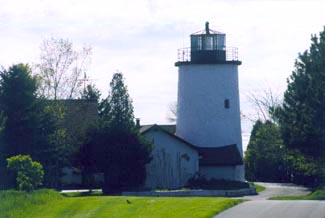
Photo Gallery
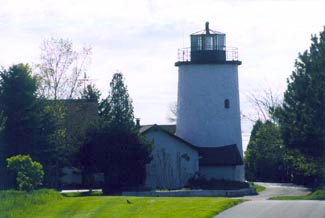
Photo Gallery
Photo Gallery
In 1850, the State Legislature of Wisconsin presented the following memorial to the U.S. Senate.
That Port Ulao is situated on the western shore of Lake Michigan, twenty-five miles north of Milwaukie, in the county of Washington; that it has a population of two hundred inhabitants, and that its commerce is fast increasing; that within a distance of four miles inland there are four villages with a population in the aggregate of fifteen hundred inhabitants, and that in the vicinity of those inland villages there is water power sufficient to propel one hundred run of stone, which water power is partially improved.Your memorialists further state, that good roads are now being made from Port Ulao through the county of Washington, into the counties of Dodge and Fond du Lac, thereby making Port Ulao the nearest eligible point on Lake Michigan for the exportation of the iron manufactured in the counties of Dodge and Washington, and also for the exportation of the produce from a large part of the counties of Dodge, Washington, Fond du Lac, Marquette, and Columbia.
Your memorialists therefore request your honorable bodies to appropriate a sufficient sum to build a light-house and improve the harbor at Port Ulao.
Congress appropriated $3,500 for a lighthouse at Port Ulao on September 28, 1850, and then in lieu of this, allocated $1,000 for a “small beacon light on or near the pier at Port Ulao” on August 3, 1854. This beacon light was never constructed, and it wasn’t long before steamers stopped burning wood. Port Ulao, which was never much more than a pier, was subsequently abandoned.
Amazingly, it seems Port Ulao, now part of Grafton, was destined to have a lighthouse. In 1981, Brana Kevich, an ordained Serbian Orthodox priest, and his wife Neva built a lighthouse home on a bluff overlooking Lake Michigan to fulfill a personal quest to own and live in a lighthouse. The lighthouse, known as Kevich Lighthouse, stands just fifty-feet-tall, but has a focal plane of 163 feet, giving it the distinction of having the highest focal plane of any active lighthouse on the Great Lakes – only Boyer Bluff Light is higher. The U.S. Coast Guard certified Kevich Lighthouse as a Class II Private Aid to Navigation in 1990.
In 1996, Dave and Mary Bennett purchased the lighthouse. “We've always been interested in lighthouses, and after a few years of watching the housing market, we kept following this particular property. So we finally made a deal and bought it.”
Two metal halide lamps, a 400-watt lamp mounted above a 1,000-watt lamp, were serving as the light source for Kevich Lighthouse in 2006. A shield rotates around the lamps once every eight seconds, creating a signature of four seconds of light followed by four seconds of darkness.
The favorite aspect of their lighthouse home for the Bennetts is its view of Lake Michigan. “We love watching the water, seeing how it changes throughout the day, with the sunlight coming off the water,” Dave said. “We also love watching the boats, like the Great Lakes freighters that pass by, along with pleasure boats and sailboats.”
In 1847, James T. Gifford, an investor and former Illinois state legislator, founded a cordwood business at Port Ulao on the western shore of Lake Michigan between Milwaukee and Port Washington. Gifford purchased felled trees from nearby farmers, milled the trees into cordwood, and then used a system of shoots to deliver the cordwood from the bluff top to the beach, where he sold it to steamers from his 1,000-foot pier.
In 1850, the State Legislature of Wisconsin presented the following memorial to the U.S. Senate:
That Port Ulao is situated on the western shore of Lake Michigan, twenty-five miles north of Milwaukie, in the county of Washington; that it has a population of two hundred inhabitants, and that its commerce is fast increasing; that within a distance of four miles inland there are four villages with a population in the aggregate of fifteen hundred inhabitants, and that in the vicinity of those inland villages there is water power sufficient to propel one hundred run of stone, which water power is partially improved.
Your memorialists further state, that good roads are now being made from Port Ulao through the county of Washington, into the counties of Dodge and Fond du Lac, thereby making Port Ulao the nearest eligible point on Lake Michigan for the exportation of the iron manufactured in the counties of Dodge and Washington, and also for the exportation of the produce from a large part of the counties of Dodge, Washington, Fond du Lac, Marquette, and Columbia.
Your memorialists therefore request your honorable bodies to appropriate a sufficient sum to build a light-house and improve the harbor at Port Ulao.
Congress appropriated $3,500 for a lighthouse at Port Ulao on September 28, 1850. In lieu of this, Congress allocated $1,000 for a “small beacon light on or near the pier at Port Ulao” on August 3, 1854. This beacon light was never constructed, however, and it was not long before steamers stopped burning wood. Port Ulao, which was never much more than a pier, was subsequently abandoned.
Amazingly, it seems Port Ulao, now part of Grafton, was destined to have a lighthouse after all. In 1981, Brana Kevich, an ordained Serbian Orthodox priest and skilled woodworker, and his wife, Neva, built a lighthouse home on a bluff overlooking Lake Michigan to fulfill a personal quest to own and live in a lighthouse. The lighthouse, known as Kevich Lighthouse, is attached to their home and stands just 50 feet tall. Its light, however, has a focal plane of 163 feet, giving it the distinction of having the highest focal plane of any active lighthouse on the Great Lakes—only Boyer Bluff Light is higher. The U.S. Coast Guard certified Kevich Lighthouse as a Class II Private Aid to Navigation in 1990, under light number 20765.
The lighthouse was built more than a century after Congress had first appropriated money for a lighthouse at Port Ulao, making the Keviches’ private lighthouse a remarkable fulfillment of a plan that had never been realized through public funds. Although privately owned, it continues to serve as an official aid to navigation.
Brana Kevich also left his mark on the house through his woodworking. He carved intricate designs into numerous doors and other architectural details, giving the home a distinctive character. Among the carvings are scenes depicting sailboats and woodland settings, as well as a particularly appropriate carving of the Kevich Lighthouse itself. The door bearing the lighthouse carving is the door to the lighthouse, making the craftsmanship an especially fitting part of the structure. The property also features handmade light fixtures decorated with trees and flowers, exposed wooden beams, and other original woodwork created by Brana.
In 1995, David and Mary Bennett purchased the property from the Keviches for $410,000. “We've always been interested in lighthouses, and after a few years of watching the housing market, we kept following this particular property. So we finally made a deal and bought it.”
Two metal halide lamps, a 400-watt lamp mounted above a 1,000-watt lamp, were serving as the light source for Kevich Lighthouse in 2006. A shield rotates around the lamps once every eight seconds, creating a signature of four seconds of light followed by four seconds of darkness.
The Bennetts’ favorite aspect of their lighthouse home was its view of Lake Michigan. “We love watching the water, seeing how it changes throughout the day, with the sunlight coming off the water,” Dave said. “We also love watching the boats, like the Great Lakes freighters that pass by, along with pleasure boats and sailboats.”
After remaining in the Bennett family for roughly three decades, the lighthouse property returned to the real-estate market in 2026. The 3.69-acre property, which includes the four-bedroom, three-bathroom home and its private lighthouse, was listed for $1.28 million. Realtor.com described the property as one of Wisconsin’s distinctive waterfront estates, with panoramic views of Lake Michigan and a rare combination of history, craftsmanship, and private ownership.
The property was already under contingent offer when Realtor.com reported on its listing on August 12, 2026. Thus, after nearly half a century as the home of two families, the Kevich Lighthouse appears poised to enter another chapter in its unusual history.
References